
I ruined a really nice pair of pruning shears last year. Cost me like forty bucks. Left them outside after cutting back some hydrangeas in November. Found them in March buried under leaves. Rusted solid. Threw them in the trash.
My wife still gives me crap about it.
So I had to get my act together. Not because I’m organized. I’m not. But because I got tired of buying new tools every spring when the old ones looked like garbage.
Here’s what I figured out. It’s not complicated. But you have to actually do it.
Clean Your Stuff. Like Really Clean It
I used to think hosing off a shovel counted as cleaning. It doesn’t.
What happens is you spray it, the big mud falls off, you lean it against the wall, and then the water sits in all the little crevices around the handle. Two months later that metal is orange.
Now I do this:
I keep a wire brush hanging right next to where I put my tools. Not in a drawer. Not in the garage on a shelf. Right there. So when I’m done digging or chopping or whatever, I spend maybe thirty seconds scraping the heavy dirt off before I even walk inside.
When I’m actually putting things away for the season, I fill a bucket with warm water and a squirt of dish soap. I scrub everything with a stiff brush. I get the dirt out of the little spots where the blade meets the handle. I flip things over and look at the bottom. That’s where rust starts. Right where nobody looks.
Then I dry them with a towel. Not a paper towel. A real towel. I make sure there’s no water sitting anywhere.
My neighbor thinks I’m insane for this. But his tools are rusty and mine aren’t so I don’t really care what he thinks.
Oil Is Cheap. New Tools Are Not
Here’s a thing I learned from an old guy at the hardware store years ago. He said metal needs to be sealed. Not with paint. With oil. Just a thin coat. Keeps the air and moisture from touching it.
He was right.
I use whatever oil I have. Motor oil from the garage. Vegetable oil from the kitchen. One time I used olive oil because that’s all I had. Probably not the best idea but it worked.
You just pour a little on a rag. Wipe down everything metal. Shovels, hoes, trowels, the blades on your pruners, the metal parts on your wheelbarrow handles. Takes maybe ten minutes.
For pruners and loppers, open them up and put a drop of oil right where the two pieces pivot. Open and close them a few times. Work it in. That’s what stops them from seizing up.
Wood handles need love too. If you ignore them they dry out and crack. I rub boiled linseed oil on mine maybe once a year. Keeps the wood smooth and you don’t get splinters when you’re using them.
Where Do You Actually Put All This Stuff
This is the part nobody wants to talk about because most of us don’t have a great place for tools.
I used to lean mine against the side of the house. Right there by the back door. Seemed convenient. But they got rained on. The handles got sun damage. My dog knocked them over constantly.
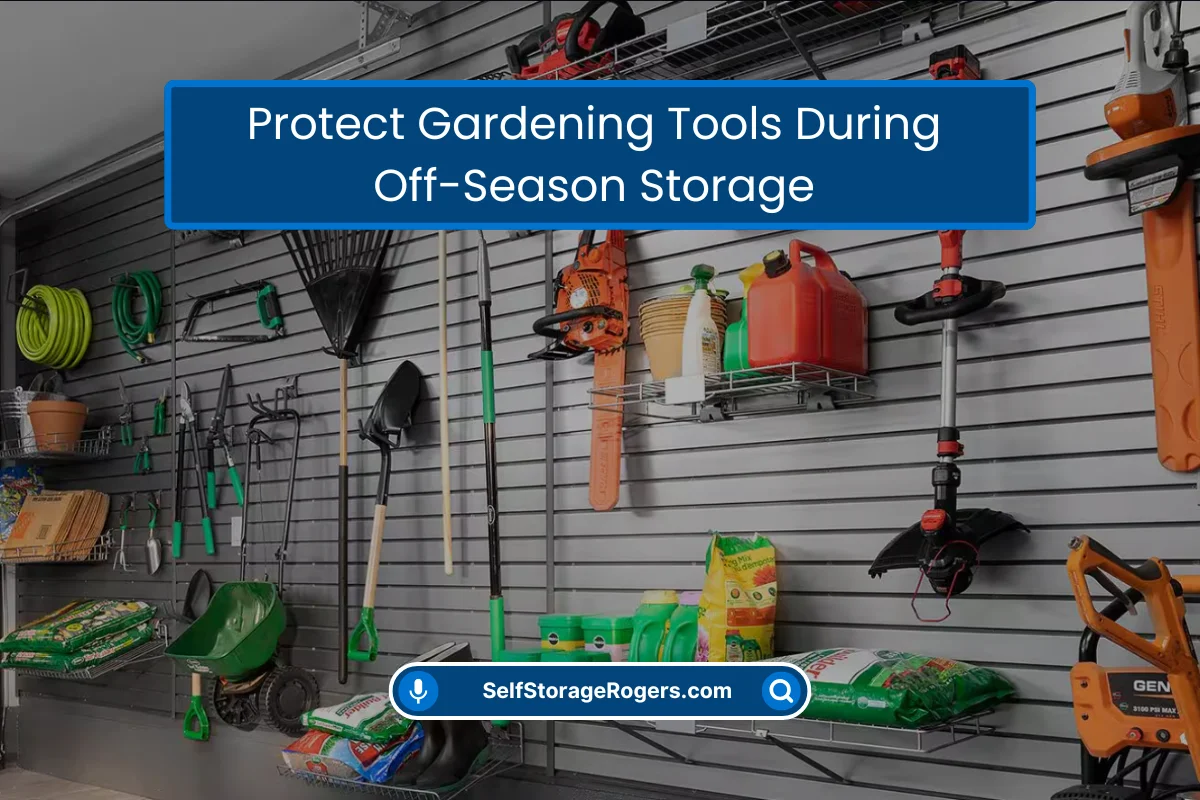
Then I cleared out half my garage. Built a rack with some 2x4s and hooks from the hardware store. Cost maybe thirty bucks. Hung everything up.
Hanging is the move. When tools sit on the floor, especially concrete, they soak up moisture. The handles rot. The metal rusts faster. Hanging them lets air move around them. Keeps them dry.
If you don’t have garage space, I get it. Not everybody does. A lot of people I know use a storage unit for their seasonal stuff. Not just boxes of Christmas decorations but their lawn stuff too.
We see this a lot at our storage facility. People rent a unit for their gardening gear because their garage is too full or their shed is falling apart. It makes sense honestly. It’s dry, it’s secure, and you’re not tripping over a rake every time you park your car.
Don’t Just Throw Everything in a Pile
I have a friend who throws all his hand tools in a plastic tub at the end of the season. Trowels, pruners, gloves, seed packets, plant markers, all of it just dumped in there.
Then spring comes and he’s dumping that tub out on the driveway looking for one specific thing. It drives him crazy. He complains about it every year. And he still does the same thing the next fall.
I bought five clear bins from Target. Like twelve bucks each. I labeled them with a marker.
One says Hand Tools. One says Watering Stuff. One says Gloves and Twine. One says Seeds and Tags. One says Pest Stuff.
It’s not rocket science. But when I need my hand pruners I know exactly which bin to grab. I don’t dig through anything. I don’t get frustrated.
Gas Tools Are a Whole Different Problem
This is where I screwed up bad a couple years ago.
I put my lawnmower in the shed with gas still in it. Left it there for like four months. When I pulled it out in the spring, it wouldn’t start. The gas had turned into this thick goo inside the carburetor. I ended up taking it to a guy who charged me eighty bucks to clean it.
Now I run my mower dry every fall. I just let it run until it sputters and dies. Takes maybe ten minutes. No gas sitting in there. No problems in the spring.
Same thing with trimmers and leaf blowers. If it has a gas engine, run it dry before you put it away.
For the electric stuff, just make sure batteries aren’t sitting on concrete. Concrete drains batteries. I don’t know why. It just does. Keep them on a shelf or a workbench.
The Chemical Shelf
Fertilizers and weed killers and all that stuff. You need to look at the bottles before you store them.
I had a bottle of liquid fish fertilizer leak inside a storage bin one year. That smell stayed in that bin for months. My wife almost made me throw the whole bin away.
So now I check everything. If a bottle is cracked or the lid doesn’t seal right, I deal with it. I pour it into something else or I get rid of it.
I keep all that stuff on a high shelf separate from my tools. Not because of kids. I don’t have little kids anymore. But because if it leaks, it ruins everything below it.
Look at What You Have Before You Store It
This sounds obvious but walk through your tools before you put them away for the season. Actually look at each one.
Is the handle loose on that shovel? Tighten it now. Not next spring.
Are the blades on your pruners dull? Sharpen them now. It’s easier to do it when you’re cleaning them than to remember where you put the sharpener six months later.
Is that rake bent? Straighten it or toss it. Don’t store junk. You’re just making more work for yourself later.
I try to be honest with myself about this. If I haven’t used a tool in two years, I probably don’t need it. I give it away or I toss it. Less stuff to store means less stuff to clean and organize.
A Couple Things I Learned the Hard Way
Don’t store bags of soil or mulch on top of your tools. The bags get heavy when they get damp and they crush whatever is under them.
Don’t wrap extension cords around sharp tools. They get cut and then you don’t know until you try to use them and get shocked.
Don’t leave your hose connected to the spigot. Water freezes in there and cracks the hose or the spigot. Disconnect it. Drain it. Coil it up.
Don’t store seeds in a hot shed or garage. They die. Keep them in a cool dry place. I keep mine in a bin in the closet inside my house.
Just Do It
Here’s the thing. None of this takes that long.
Cleaning everything takes maybe an hour. Oiling takes ten minutes. Sorting into bins takes another hour if you’re slow.
Two hours once a year. That’s it.
What you get in return is tools that actually work when you need them. No rust. No stuck pruners. No running to the store because your shovel handle broke. No standing in the garage frustrated because you can’t find anything.
Your garden takes enough work. Your tools shouldn’t make it harder.
So yeah. Clean them. Oil them. Hang them up or put them in a dry spot. Sort your small stuff into bins. Run your gas tools dry. And then when next season comes around, you just grab your stuff and go.
It feels good. I promise.
Now if you’ll excuse me I need to go oil my pruners before I forget again.










0 Comments