
Alright, let’s start over.
My name is Jim. I’m not a professional writer. I run a place called B&D Self Storage. You’ve probably seen the sign with the big yellow padlock. That’s me. I bought this place after retiring from the plant, thinking it’d be quiet. Boy, was I wrong. People’s stuff tells their life stories, and I’ve heard most of them.
I’m typing this on my desktop computer in the back office. The fan’s whirring like it’s about to take off. My wife, Carol, is out front watering the petunias she planted by the gate. I’m telling you this so you know I’m a real guy. I’m gonna talk to you like you pulled up in my lot, looking confused, and asked for help. No fancy talk. Just straight.
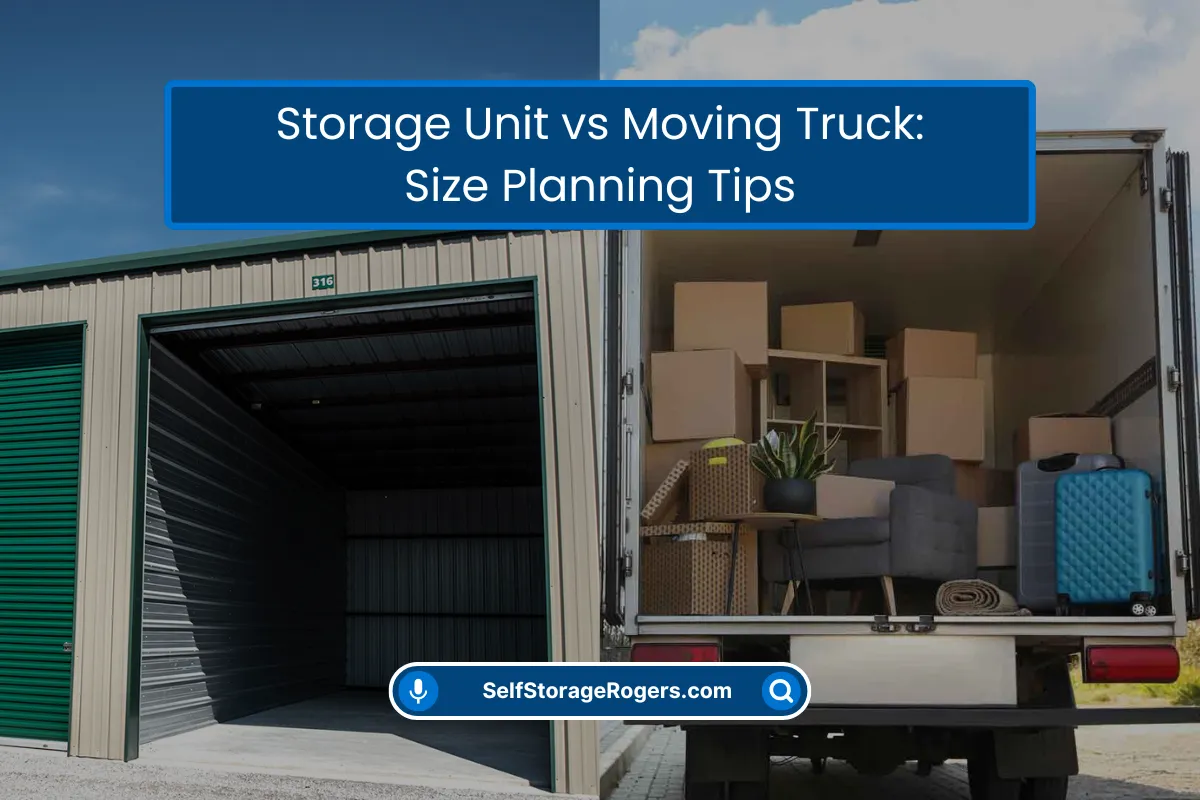
I saw a guy last summer, maybe a few years older than my son. He showed up in a 26-foot truck he’d clearly just driven off the lot. The thing was pristine. He looked terrified. He got out, walked over to a 10×20 unit he’d rented online, rolled up the door, and just stared into the empty space. Then he stared at the massive truck. He had no idea how to connect the two.
I walked over, introduced myself. “First big move?” I asked. He nodded, looking a little sick. “Let’s make a plan,” I said.
That’s what we’re gonna do right now. A plan.
Stop Using the Internet’s Words
Forget “cubic feet” and “square footage.” Let’s use words that mean something in your house.
Think about your biggest obstacle. Not a room. A single thing.
Is it your king-size sleigh bed? That monster with the footboard?
Is it the big, plush sectional from the family room?
Is it your husband’s giant toolbox on wheels he swears he’ll use someday?
That thing—that obstacle—is your Rosetta Stone. It’s the key to translating your pile of life into a truck size and a storage unit.
Trucks: It’s About Trips, Not Inches
Here’s the secret the rental place won’t tell you: their job is to rent you a truck. Your job is to move your stuff. These are not the same thing.
My son helped his friend move last year. They rented a 14-footer for a two-bedroom apartment. They filled it. Then they had a washer, a dryer, and three bookcases left on the curb. They had to go back, extend the rental, and make a second trip. By the time they paid for the extra day and the extra gas, they could have rented the 20-footer and been done at noon.
So here’s my rule, forged from watching people make that same mistake for a decade:
If the rental guy gives you a choice between two sizes, point to the bigger one.
Always. The difference is usually twenty, thirty bucks. You will spend more than that on pizza and Gatorade for your friends. The price of the next size up is the cheapest stress-relief you can buy.
- A 16-foot truck is for when you’re moving out. Of an apartment, a condo, a small rental house.
- A 20-foot truck is for when you’re moving a home. You’ve got more than just furniture; you’ve got a history in boxes.
- A 26-foot truck is for when you’re moving a dynasty. You have heirlooms and enough seasonal decor for a department store.
Storage Units: Seeing is Believing
People call and ask, “What’s a 5×10 look like?” I tell ’em, “It looks like a parking space. Come see it.”
But since you’re reading this, I’ll try to paint the picture.
- A 5×5 unit at my place isn’t just numbers. It’s the size of a generous bathroom. You could fit a motorcycle in there. Or a queen mattress set, a dresser, and all your off-season clothes. I had a college kid store his entire dorm room in one—mini-fridge, loft bed, the whole deal. He made it work.
- A 10×10 unit is different. It has a feel. It feels like a room. When you walk in, you don’t feel boxed in. You can put your couch along that wall, your bookshelf here, your dining table there, and you’d still have space to walk around and point at things. It doesn’t feel like storage; it feels like a very tidy, very empty studio apartment. This is where people put the “life in between.” The furniture from mom’s house after she passed. The stuff from the kids’ rooms after they finally moved out for good.
- A 10×20 is a cavern. The sound changes when you talk in one. This is for when you’re hitting pause on a whole chapter. An entire household. Everything from the garage sale that didn’t sell.
The Bridge Between Them
This is the simple math they don’t teach you.
Let’s say you’re moving from the house you raised kids in to a smaller condo. You’ve got a 20-foot truck coming.
You load the truck with everything.
You drive to the condo. You unload the stuff for your new, smaller life. The new couch. The bed. The kitchenware you actually use. The favorite books.
What’s left in the truck? The “not anymore” stuff. The bunk beds from the kids’ room. The giant oak dining table that seats ten. The Christmas decorations that fill an entire closet.
That leftover portion? That’s what a storage unit is for. That leftover third-of-a-truckload will fit, almost perfectly, into a 10×10 unit.
You don’t need two rentals. You need one truck and one smart stop. You unload your new life at the condo, then you drive the remainder of the truck straight to my lot at B&D Self Storage. You back it up to your unit, and you transfer the “not anymore” pile from the truck to the unit. Then you return the truck. Done.
One day. One fee. One plan.
Hard-Won, Practical Tips
- Break it down. A table is a top and four legs. A bed is a headboard, a frame, and a slab. You are not moving furniture. You are moving parts. Parts pack easier.
- The Box Rule. If you can’t lift it with one hand when it’s full, it’s too heavy. Books go in small boxes. Pillows go in trash bags (the heavy-duty kind). Mark every box on the side in big letters. “MASTER BEDROOM – SHOES.” “GARAGE – XMAS LIGHTS.” You will not remember.
- Truck Tetris. Heavy, dense boxes go at the very front, right behind the cab. Build a wall of them. That’s your foundation. Then load furniture. Then fill the air above the furniture with light, bulky stuff—lampshades, empty suitcases, that giant bag of spare blankets.
- In the Unit, Be a Librarian. What will you need to get to? Your winter coats? Your tax files? Put those boxes last, near the door. What’s going in for the long haul? The china set, the kid’s artwork from kindergarten? That goes in the back. Leave yourself a skinny path to the back wall. Trust me.
The Bottom Line
If you take one thing from this, let it be this: Do not guess.
Your stuff is the evidence of your life. It deserves a plan.
If you’re standing in your garage right now, looking at all of it and your brain is starting to hum with panic, just stop. Pick up the phone.
Call me at B&D Self Storage. The number’s on the website. It’ll ring in my office. Tell me what your “biggest obstacle” is. Tell me about the sleigh bed or the sectional. I’ll tell you what I’ve seen fit before. I’ll say, “Why don’t you come by before I close at six? I’ll show you the 10×10. You can stand in it.”
And you should. Seeing the space with your own eyes—walking into it, hearing the door roll up—it changes everything. It turns a scary, expensive question into a simple solution.
That’s my real job. Not just renting space. Being the guy who helps you figure it out so you don’t waste your money, or your weekend, or your peace of mind.
You can do this move. Be smart. Be a little ruthless when you sort. And for the stuff worth keeping, we’ve got a clean, dry, well-lit place for it to wait for you.
Come see me. We’ll figure it out together.








0 Comments