Alright, let me put my coffee down and talk to you like we’re in my messy garage right now. I’m not a writer, I’m a guy who ran a hardware store for fifteen years and now I help run a storage facility with my brother-in-law, Mike. So I know building materials, and I know corners people cut. Let me tell you what we learned the hard way.
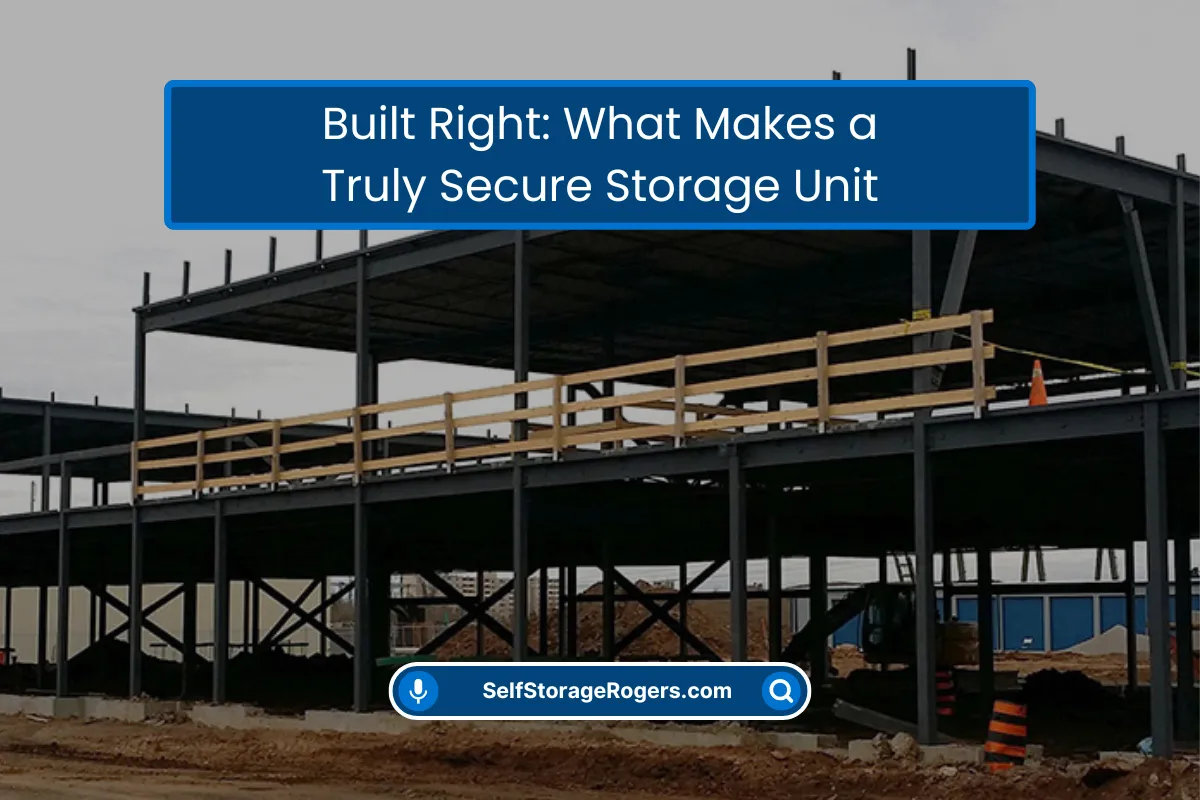
Mike and I got into storage after a bad experience. Not as customers—as guys who build stuff. We were hired to fix a row of units at another place. The doors wouldn’t lock right. When we took them off the tracks, we found the metal was so thin you could practically bend it with your hands. The frames were anchored into the concrete with these tiny, cheap screws, like something from a kid’s playset. No wonder people were complaining about leaks and rattling.
We looked at each other and said, “If we ever do this, we don’t build like this.”
So when we finally opened B&D Self Storage, we became the annoying guys. The suppliers hated us. We’d ask about steel gauge, door seals, concrete PSI. They’d give us the standard line, and we’d say, “Show us the thick one. Show us the commercial grade.”
Here’s the thing about build quality. You don’t notice it when it’s good. You only scream when it’s bad. So let me point out what to scream about before you sign anything.
1. The Door Isn’t the Door
Sounds stupid, right? But it’s true. The big rolling metal thing? That’s just a cover. The REAL door is the seal around it. That rubber gasket.
I want you to do something on your next tour. Don’t look at the lock. Don’t look at the color. Get close to that rubber strip. Pinch it. Is it thick, soft, like the seal on your car door? Or is it thin, hard, cracking at the corners?
If it’s thin and hard, walk away. That seal is the ONLY thing keeping out the damp morning air, the dust from the gravel driveway, and—I’m not kidding—spiders. A bad seal means the inside of your unit isn’t really “inside.” It’s just a slightly sheltered part of the outside. Our seals? We bought the kind they use on walk-in freezers. Overkill? Maybe. But I sleep at night.
2. The Floor is a Sneak
You look at concrete and think, “Solid. Good.” But concrete is thirsty. It drinks moisture from the dirt below it and sweats it into your unit. An unsealed concrete floor will ruin the bottom of a cardboard box in six months. It’ll make wooden furniture legs swell.
Ask the manager: “Is the floor sealed with a moisture barrier?” If they say yes, ask what product. If they look at you like you have three heads, you have your answer. Our floors got two coats of a heavy-duty epoxy sealant. It’s the stuff they use in garage workshops. It creates a plastic-like shield. Your stuff sits on a dry shelf, not a wet sponge.
3. Walls That Aren’t Walls
A lot of places, the walls between units are just corrugated metal panels bolted to a frame. If the guy next to you bumps his sofa against the wall, your wall dents. It also transfers sound and temperature.
We went with solid core construction between units. It’s more like a real building wall. It deadens sound, provides a thermal break (so your neighbor’s non-climate unit doesn’t freeze yours), and it can take a hit. It costs more. But you’re not paying for a movie ticket, you’re paying for security. Your stuff shouldn’t know the neighbor exists.
4. The Roof Leak Test (You Can’t Do, But We Did)
Before we opened, Mike and I did the dumbest thing. We waited for a huge, torrential rainstorm. Then we went inside our brand-new, empty units with flashlights. We looked at every corner of the ceiling, every seam where the wall met the roof. For two hours. In the rain.
We found one small drip in B&D Self Storage. One. The builders had missed a spot of sealant. We made them fix it the next day. The point is, a roof shouldn’t leak. But you have to be crazy enough to check when it’s pouring. Most big companies build fast and move on. We built slow and checked obsessively.
So what does this mean for you?
It means when you store with us, you’re not getting a tin shed. You’re getting a small, well-built room. The difference is in the boredom of it: the thicker gauge steel, the extra tube of caulk, the second coat of sealant.
Your things—your kid’s old stuffed animals, your tax records, your winter tires—they deserve a dry, quiet, solid home. Not a shaky metal box that whispers to the one next door.
That’s our whole philosophy. No magic. Just better materials and taking the time to put them together right. It’s how my dad taught me to build a deck, and it’s how Mike and I built your storage unit.
Next time you’re looking, be the annoying customer. Ask about the seal. Ask about the floor. The right place won’t mind. They’ll be proud to tell you.
Hope that helps. Seriously. Come by the office sometime. I’ll show you the difference in person, and the coffee’s always on.



0 Comments