
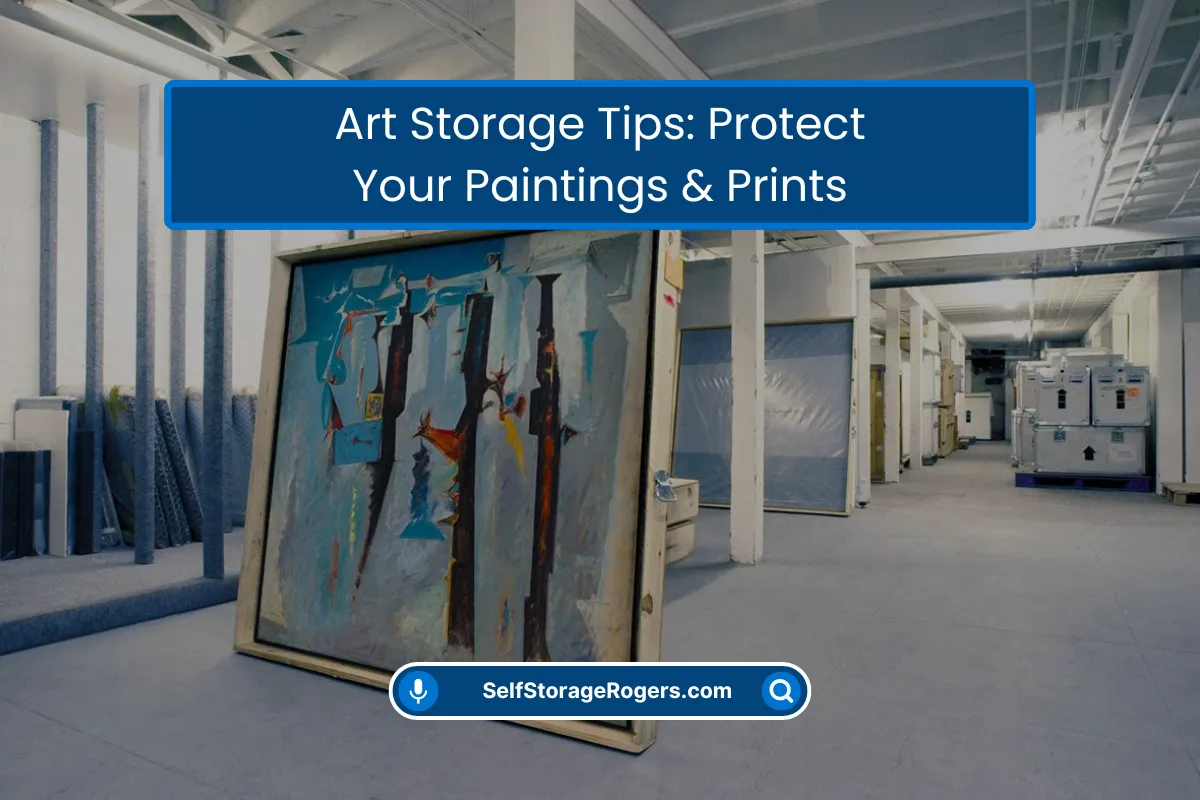
Hey. So you’re staring at that painting or that sculpture or those prints thinking, “How the hell do I store this without wrecking it?” Yeah, me too. A few years ago I absolutely destroyed a signed concert poster from my favorite band because I was an idiot. I rolled it up, shoved it in a tube, and forgot it in my parents’ basement for a summer. Came back to a tube full of crispy, curled, sad paper that smelled vaguely of damp basement. Lesson learned. The hard way.
Let’s not do that to your stuff.
This isn’t a museum guide. This is from someone who’s messed up and (eventually) figured it out. You’re not storing “items”; you’re putting pieces of what makes your place feel like yours into a box. It feels weirdly personal. So let’s do it right.
Forget the Fancy Terms, Remember These Two Things
- Consistency is king. Art hates change. Wild swings from hot to cold, dry to damp—that’s what warps wood, cracks paint, and invites mold. Think about that feeling when you walk into a musty old shed. That’s the enemy.
- Nothing touches the thing. Not bubbles, not tape, not the side of another frame. Always have a buffer.
The “What You Actually Need” Packing List (Not the Pinterest One):
You don’t need archival-grade everything unless you’re storing a Picasso. Be practical.
- Plain, clean paper: Butcher paper, even the blank side of wrapping paper. Newspaper is a no—the ink can bleed. I use the big rolls of brown kraft paper from the post office. For super precious paper stuff (old letters, nice drawings), yeah, grab some acid-free tissue paper from the craft store. It’s cheap insurance.
- Bubble wrap, but use it like a psycho: DO NOT let the bubbles touch the surface of a painting or the glass of a frame. Those little bubbles can leave a permanent indentation on paint or canvas over months. Wrap in paper first, then bubble wrap. I learned this after a friend showed me the weird polka-dot texture left on her acrylic painting. Nightmare.
- Cardboard corners: You can buy these cheap online, or you can make them by cutting up an old Amazon box. They’re magic for keeping frame corners from getting bashed.
- Painter’s tape (the blue or green kind): For anything with glass. Before you wrap, put a big “X” of painter’s tape across the glass. If it shatters during moving, the tape holds it all together so the shards don’t scratch the artwork. It peels right off later.
- Sturdy boxes: “Book boxes” from moving companies are perfect—they’re small enough that you won’t be tempted to overfill them.
How to Pack the Weird Stuff (A Realistic Guide):
- Canvases (on a stretcher frame): The biggest mistake? Laying them flat and stacking stuff on top. You’ll crack the wooden frame on the back. Stand them up on their long edge. Face two paintings towards each other, put a piece of cardboard between them, and wrap them together like a sandwich. They support each other.
- Framed stuff with glass: Tape the “X” on the glass. Wrap the whole frame in paper. Use your cardboard corners. Wrap in bubble wrap. Write “GLASS – FRAGILE” like you’re shouting at the movers.
- Prints, posters, drawings: If it’s flat, keep it flat. A portfolio case is ideal. Lacking that, a big, flat box. Put a sheet of paper between each one. Don’t let them slide around. And for god’s sake, don’t roll them unless they were originally rolled. They might never flatten again.
- Sculptures or weird 3D things: Wrap it in paper like a mummy. Then give it a thick bubble wrap jacket. Find a box that gives it a couple inches of room on all sides. Crumple up plain paper (ball it up) and pack it in all the empty spaces so the piece can’t move an inch. Mark “TOP LOAD ONLY – FRAGILE SCULPTURE” in huge letters.
The Real Secret: Where You Put It All
This is the part that matters more than your perfect packing job. Your garage? Probably bad. Your attic? Terrible in summer. Your basement? A mold festival waiting to happen.
You need a place that doesn’t get hot, doesn’t get cold, doesn’t get damp. You need a steady, boring, neutral environment.
This is why I eventually broke down and got a climate-controlled storage unit. It’s not just “inside.” It’s a space that keeps the same basic temperature and humidity all year. No sweating, no freezing, no damp. It feels like a boring office hallway. Which is exactly what you want.
I use a place called B&D Self Storage for my own stuff now. After my basement disaster, I went to check them out. The guy who showed me around, Mike, actually asked what I was storing. When I said “art and some musical gear,” he nodded and said, “Yeah, the climate control here will keep all that happy. We keep it dry and steady.” He wasn’t just selling a unit; he got it. That mattered. It feels secure and, honestly, kind of boring—which is the highest compliment I can give a storage unit. If you’re local, just go see their units. Walk in. You’ll feel the difference immediately.
Final, Non-Negotiable Tips:
Label like a maniac. “JEN’S OIL PAINTINGS – THIS SIDE UP ↑” on every side of the box. Assume the box will end up upside down.
Get it off the concrete floor. Put your boxes on a pallet, some planks of wood, even those plastic milk crates. Concrete can “sweat” and transfer moisture.
Don’t shove it in the back. If you can, leave a little space around your art boxes. Don’t cram them against a wall that gets afternoon sun.
Check on it. Once every few months, I swing by my unit. Not for long. Just open the door, make sure nothing smells weird, feel that the air is dry. It takes five minutes and kills the “what if” anxiety.
It feels like overkill until you unpack a piece and it’s perfect. Then it just feels smart. You’ve got this. Just remember: steady and don’t let anything touch it.
And if you want a truly boring, safe, climate-controlled home for your stuff while you’re between places, seriously, check out B&D Self Storage. Tell them the person with the ruined concert poster sent you. They’ll know exactly the kind of heartbreak you’re trying to avoid.










0 Comments