
If you are anything like me, your camera gear isn’t just equipment—it’s an extension of your creativity. Whether you are a professional wedding photographer with a closet full of bodies and lenses, or a passionate hobbyist who saved up for months for that one dream lens, the last thing you want is to pull out your gear for a shoot only to find it damaged, dusty, or worse, growing mold.
I have been there. You finish a long shoot, you are exhausted, and you just want to pack everything away quickly. But where does it all go? For a lot of us, it ends up shoved in a closet, thrown in the trunk of the car “just for the night,” or sitting on a shelf in the living room where humidity and accidents run wild.
Storing camera gear correctly isn’t just about being tidy; it is about protecting your investment. Let’s talk about some real-world solutions to keep your gear safe, so you can focus on taking the perfect shot.
The Hidden Enemies of Your Camera
Before we dive into the “how” of storage, we need to talk about the “why.” Your camera faces several silent threats when it is not in use:
- Humidity: This is public enemy number one. Moisture in the air can cause lens fungus, which spreads like a disease and ruins glass.
- Dust and Debris: Tiny particles can sneak into sensor chambers and lens mechanisms.
- Physical Impact: A camera bag that gets knocked off a chair or has heavy items stacked on top of it can throw off calibration.
- Theft: This is an uncomfortable topic, but expensive gear left in plain sight in a home is a risk.
The “Dry Box” Method vs. The Everyday Bag
Most photographers know they need a bag, but not all bags are created equal for storage.
For short-term storage or transport, a padded backpack is fine. But for the weeks or months when you aren’t using a specific lens, you need more. A lot of people invest in a “dry cabinet” or a “dry box.” These are sealed containers that allow you to control the humidity.
If you are storing a lens for a long period, take the lens caps off and store it with the rear element facing down. This prevents dust from settling on the glass. Throw a few silica gel packets (the little “Do Not Eat” packs) into the box to absorb ambient moisture. You would be surprised how much water those little things can pull out of the air.
Climate Control Isn’t Just for Your House
Here is something that took me a long time to learn: the climate inside your house changes. If you live in an area with seasons, your humidity levels are probably going crazy right now without you even realizing it.
In the summer, your air conditioner dehumidifies the air. In the winter, your heater dries it out. But during the spring and fall, when the AC and heat aren’t running, the humidity in your home can spike.
This is where you have to be vigilant. If your house feels sticky, your gear is feeling it too. We always recommend keeping your gear in the main living area of the house rather than a basement or an attic, as those spaces are breeding grounds for moisture and temperature swings.
But let’s be real—life gets busy. Maybe you have a lighting kit, backdrops, and a collection of vintage film cameras that are taking over your spare bedroom. If you are running out of climate-controlled space in your home, you need a backup plan.
When Your Home Runs Out of Room
We have clients who come to us because they simply have too much gear. It sounds like a good problem to have, right? But when your gear is scattered around the house in different bags, it is easy to lose track of what you have and hard to keep it safe from the elements.
Sometimes, the best way to protect your gear is to move it out of the house entirely—but into a controlled environment. You don’t want to just throw your camera bag in a dusty old storage locker. That defeats the purpose.
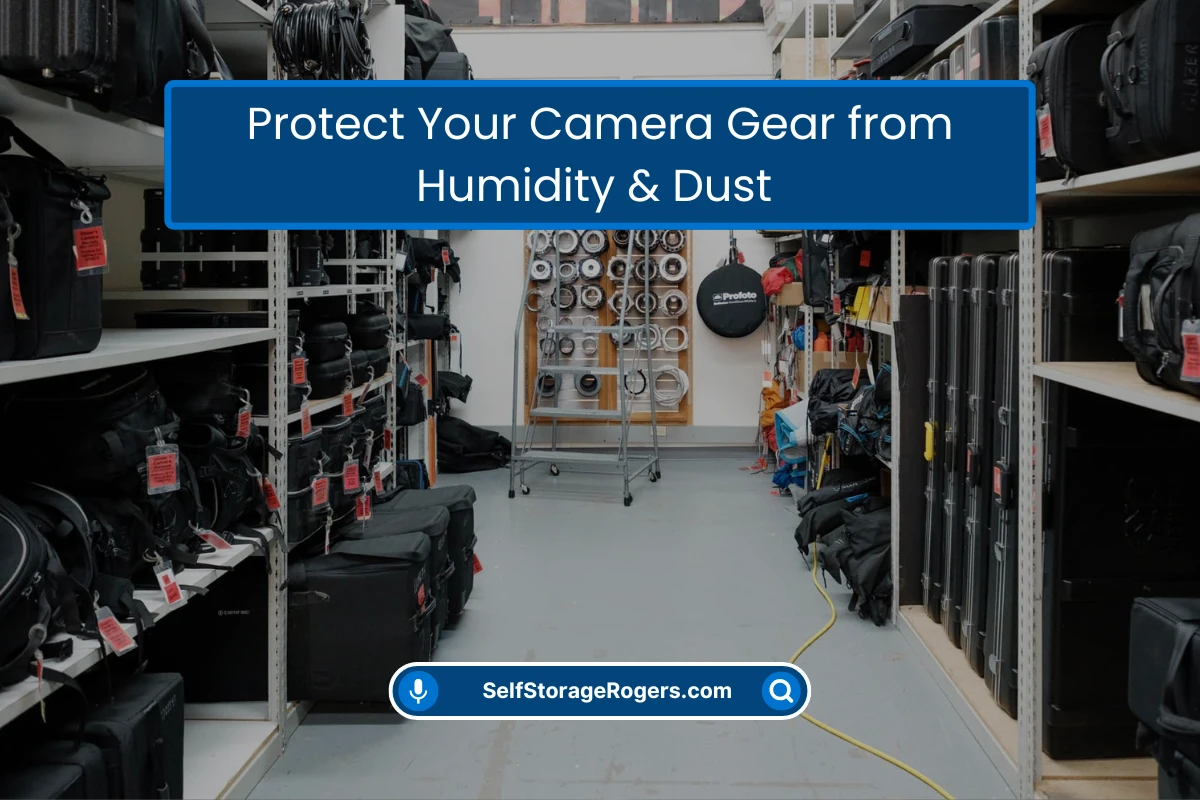
You need a space that mimics the conditions of your home. That is where our storage units come into the picture. We offer clean, secure, and climate-controlled units that maintain a steady temperature and humidity level. If your hobby is outgrowing your living room, or if you need to store seasonal gear (like heavy lighting equipment you only use for winter portraits), using a professional space ensures your gear stays in stasis until you need it again. It gives you back your living space and gives your gear the stable environment it deserves.
The “Do Not Stack” Rule
This is a simple tip, but it saves lenses. Never, ever stack heavy items on top of your camera bags. Even if the bag is padded, the pressure can misalign the internal elements of a lens.
When you store your gear:
- Keep bags upright: Treat them like they are on display.
- Remove batteries: If you are storing a camera body for more than a few weeks, take the battery out. Batteries can leak or swell over time, and removing them protects the internal contacts.
- Empty your memory cards: Make it a habit. When you put the gear away, format the cards so it is ready to go next time.
A Quick Checklist for Storing Gear
To make this easy for you, here is a quick rundown of what to do before you put your camera away for any extended period:
- Clean the gear: Use a blower to remove dust from the body and lenses.
- Check humidity: If you are using a dry cabinet, check the gauge. If you are using a shelf, ensure it isn’t near a humidifier or a drafty window.
- Loosen the zoom: If you are storing a zoom lens, set it to the widest focal length. This relaxes the internal mechanisms.
- Label everything: If you have multiple batteries or specific lenses for specific jobs, put a piece of tape on them with the date. Lithium-ion batteries degrade over time, and it helps to know which ones are oldest.
Taking care of your gear is really about taking care of your craft. When you know your equipment is safe, dry, and organized, you can sleep better at night. And if you ever find that your collection has outgrown your closets, swing by and check out our storage options. We built them with folks like you in mind—people who value their tools and need a safe place to keep them.










0 Comments