
Hey.
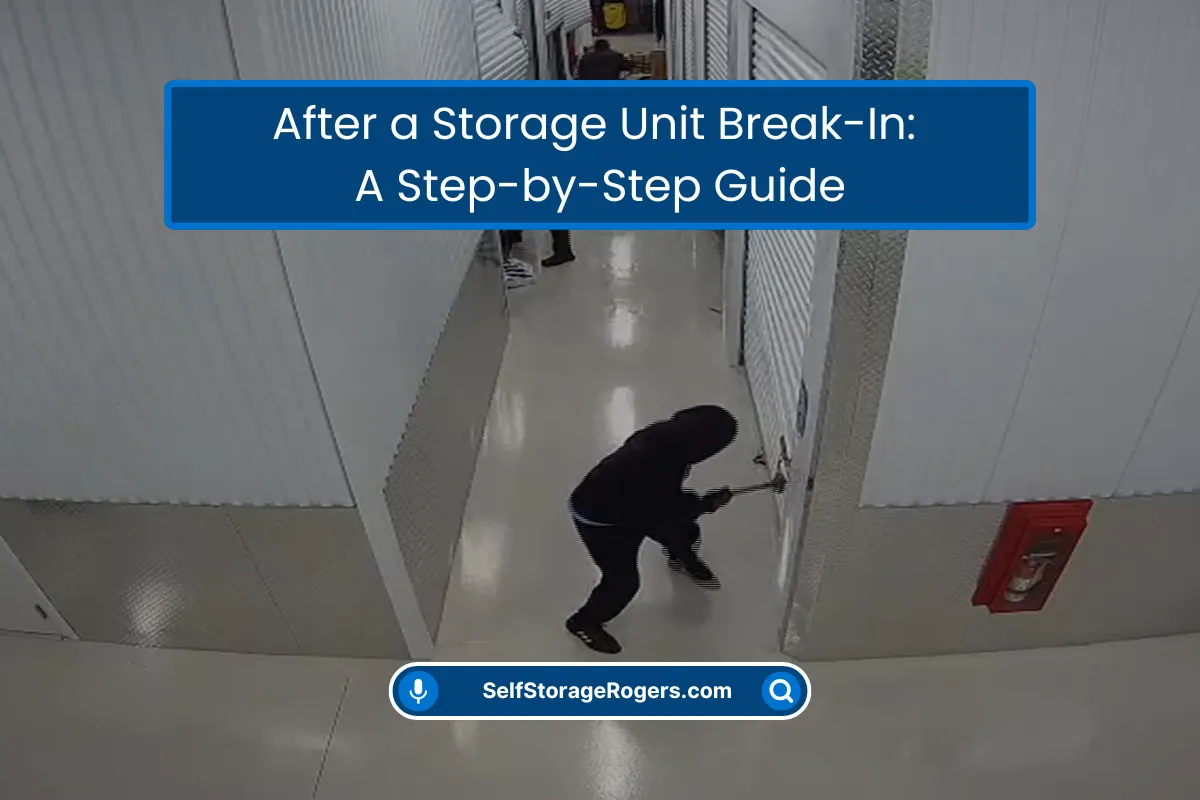
It’s me. Listen, if you’re reading this because you just found your storage unit broken into, I need you to do one thing first. Put your hand on your chest. Feel your heart going crazy? That’s okay. That’s normal. Let it beat for a second. The panic, the hot rush of anger, the “why me?” feeling—it’s all valid. I’ve stood right where you’re standing. My friend Lisa did. It feels like the world got a little bit uglier.
But you are not helpless. We are going to get through the next few hours with a clear plan. Not a corporate manual. A human one.
Step One: Don’t Be a Hero. Just Stand Still
You’re looking at the door. The lock is cut, or the latch is bent. Your brain is screaming, “GO IN. SEE WHAT’S GONE.” Your feet want to move.
Don’t.
Literally, plant your feet. Pretend there’s an invisible crime scene tape across that doorway. That space isn’t yours right now; it’s a puzzle for the police. If you go in, you’re messing up the puzzle pieces. A smudged fingerprint on the door jamb, a weird piece of thread on the ground—that could be the clue. So just… look. From right where you are.
Step Two: Find the Guy in Charge
This is non-negotiable. If you’re at a facility, you need the on-site manager. Not tomorrow. Not after you’ve looked around. Now. Walk to the office. If it’s closed, call the emergency number. Your voice might shake. That’s fine. Say, “My unit has been broken into. I am at the unit. I need you here now.”
Then, call the police. Use 911 if it feels fresh and dangerous. Otherwise, Google the local non-emergency line. Be blunt. “I’m reporting a burglary at a storage unit. The door is forced. I have not entered.”
Here’s the raw truth: This phone call and the manager’s reaction will tell you everything about the place you’re renting from. Lisa’s manager? He sighed over the phone and said, “Happens sometimes. I’ll be out when I finish my lunch.” I swear to God. She stood there for 45 minutes feeling like an idiot.
That moment changed my entire career. It’s why I helped start B&D Self Storage. Because that reaction is garbage. At our place, a cut lock means the manager is sprinting out the door with a clipboard and a walkie-talkie. They’re already reviewing who entered the gate after you did. They’re your ally, not a bureaucrat. They should look as upset as you feel. That’s the bare minimum of human decency.
Step Three: The Police & The Paper
The cops will come. They might not seem super excited. That’s their job; they see this a lot. Your job is to be the narrator.
From your spot outside, what can you see is missing? Be specific. “A bright yellow kayak was hanging from the back wall. It’s gone. Three black plastic file boxes were stacked in the corner. They’re gone.”
They will write a report. This paper is your lifeline. Do not let them leave without giving you the report number. Say it out loud. “Okay, so the report number is 2024-04567, correct?” Write it on your skin if you have to. Take a picture of the officer’s card. This number is the key to every door that comes next.
Step Four: The Insurance Grind. (Grab a Snack.)
Go sit in your car. Your hands might still be shaking. Call your insurance company. You don’t need the full story yet.
Say this: “Hi, I need to start a claim for theft. It was from a storage unit. I have a police report. The number is [X]. I will be sending a full inventory later.” They’ll give you a claim number and a list of demands. It will sound like a scavenger hunt designed by a robot. “Original receipts, photos, notarized forms…” Don’t freak out. Just write it all down. One thing at a time.
Step Five: The Awful Inventory
After the police say it’s okay, you can go in. This part is… heavy. Someone rummaged through your life. It feels gross.
Use your phone. Take a video. Talk as you do it. It feels silly, but do it. “Okay, it’s 2 PM on Tuesday. I’m in unit 5B. They’ve torn open all the boxes on the left. They took the leather suitcase but left the clothes that were in it.”
Now, the list. This is the marathon. You won’t finish today. You’ll remember something three days from now in the shower.
For each item, you’re a detective for your own life:
- Description: Not “a lamp.” Say “a brass pharmacy lamp with a green glass shade, the cord was frayed near the plug.”
- Value: What did you pay? Find an old bank statement or Amazon order. Guess honestly if you have to.
- Photo Proof: This is HUGE. Scour your phone. That random photo from your birthday with your bookshelf in the background? That’s evidence now. Find any picture that has the item in it.
- Serial Number: The holy grail. Check the dusty box in your basement, or the original email receipt.
Step Six: Patching the Hole in the Fence
Submit the claim. Get a new lock. Take a deep breath.
Then, when the dust settles, let this terrible experience force you to do one good, powerful thing:
Get ready for next time
Pick a Saturday. Take your phone. Walk through your house and film everything. Open your kitchen cabinets. Show the brand of your blender. Do the same in your storage unit. Say the items out loud. “This is the Pioneer stereo, serial number…” Save that video to the cloud. Email it to yourself. Now you have an unshakable record.
And when you look for storage—and I mean this with zero sales pitch—grill the manager. Look them in the eye. Ask, “What happens if there’s a break-in at 2 AM? Do your cameras actually record, or are they just for show? Who monitors them?” If they don’t have immediate, confident answers, walk away. Your stuff isn’t just stuff. It’s your history. It deserves a guardian, not just a garage.
You’re going to be okay. This feels huge and violating now, but you will handle it. One clumsy, frustrating, determined step at a time.
And if you ever want to just see what a place looks like that takes this stuff as seriously as you do, come by. I’ll give you the real, no-BS tour. We can even check out the camera monitors. No pressure. Just so you know what peace of mind actually looks like. You deserve that much.








0 Comments