Okay, let’s talk about the elephant in the (storage) room. You’re stuffing your life into a 10×10 box—your kid’s art projects, your winter coats, maybe your vinyl collection you swear you’ll get back into. You click that padlock shut, hear the satisfying clunk, and drive away. And then, maybe at a red light, the thought hits you: “Is this actually private? Who else can get in there?”
It’s a totally normal worry. I’d be worried if you didn’t think about it. We’ve all seen those wild storage auction shows, right? Where some guy in a cowboy hat yells and people bid on lockers full of… who knows what. It makes it look like a free-for-all. Like your unit is just sitting there, waiting to be peeked into.
Forget TV: Your Space is Yours
Let me put your mind at ease on that front first: that’s television. Dramatic, messy, and designed to keep you watching. The real world of storage is way more boring (in the best possible way) and is built on one simple idea: that space is yours.
Think of it like this: when you rent a unit, you’re basically a mini-landlord. You sign a lease. That metal door and the empty space behind it? It’s legally your responsibility for the month. And just like a landlord can’t just waltz into your apartment because they’re curious, a storage facility manager can’t just open your unit.
Seriously, they can’t. In most places, it’s not just policy—it’s the law. They need a really good reason, and they almost always have to tell you first. Those reasons are things like “there’s water pouring from under your door onto the tenant’s priceless comic books next door” or “we smell something… deeply concerning and possibly biological.” It’s about preventing a disaster, not being nosy.
Now, about that lock. This is my favorite part. At any facility worth its salt, you bring your own lock. Or you buy one from them, but you hold the only key or combo. Not the manager. Not the owner. You. The manager’s office has exactly zero keys that open your specific lock. That little piece of metal is the final, physical promise of your privacy. If you don’t have the key, you’re not getting in. Period.
But What About All the Cameras?
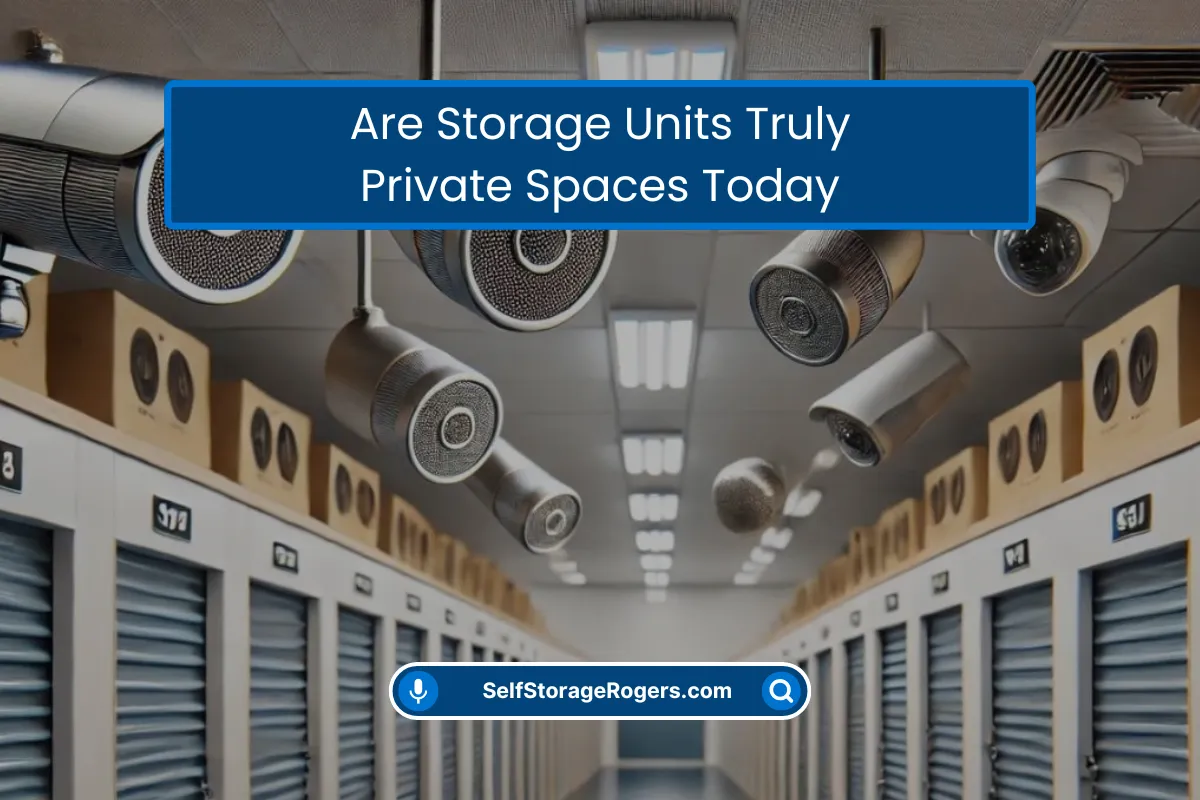
But wait, you say, what about all the cameras? The giant fence? The keypad where I have to punch in a code just to get to my own stuff? Doesn’t that feel a bit… Big Brother?
I get it. It can feel like that. But let’s flip the script. Those cameras aren’t pointed at your unit door. They’re watching the alleyways, the main gate, the hallways. They’re not there to see you haul in your boxes of old photos; they’re there to make sure nobody follows you. That personalized gate code? It doesn’t track what you do, it just makes sure that the person entering at 2 a.m. is actually you, and not some random stranger. It’s a force field keeping the outside world out, so your private space inside stays private.
So yes, there are eyes on the property. But they’re looking outward, to protect what’s inside—your unit.
The Human Element: Managers Aren’t Snoops
Here’s the human side of it, too. I’ve talked to dozens of storage managers over the years. You know what they’re obsessed with? Clean driveways. Functioning lights. Making sure the gate motor works. They’re not lying awake at night wondering if you’re storing skis or snowboards. They couldn’t care less. Their entire job is to maintain a quiet, safe, uneventful property. Your privacy is what makes their business work. If they violated that, word would get out, and they’d be out of a job.
Of course, it’s not a magical privacy bubble. There are a couple of real-world “yeah, buts” you should know.
- The Money Thing: This is the big one. If you stop paying, the dynamic changes. That lease agreement is a two-way street. But here’s what’s important: it takes a long time. It’s not one missed payment and they’re in. There’s a whole legal process of letters, warnings, and finally, a lien. Those storage auctions are a last resort, after months of no contact and no payment. Your privacy is protected right up until the legal link is completely broken.
- Your Stuff Matters: You can’t store things that endanger others—propane tanks, gallons of paint thinner, a fireworks stand. If there’s clear evidence of that (like, a very distinct smell wafting out), all bets are off for everyone’s safety.
What it really comes down to is partnership. You do your part: get a good lock (spend the $20 on a solid disc lock, trust me), keep your contact info updated, and, you know, pay your bill. A good facility does its part: maintain a secure perimeter, respect the law, and mind its own business.
That’s the philosophy we built B&D Self Storage on. We see our job as creating the most boring, secure, and well-lit parking lot for your private boxes that we can. Our gates, lights, and cameras are all about keeping the perimeter tight. What happens behind your lock is 100% your business. We don’t have a key, we don’t want one, and we’re too busy fixing potholes to wonder what’s in there. We’re just here to make sure that when you click that lock shut, the only thing you feel is relief.
The Bottom Line
So, to answer your question straight up: Yes, your storage unit is still a profoundly private space. It’s not a vault, but it’s a heck of a lot more private than your garage or your basement. It’s a simple, old-school kind of privacy, backed up by modern security and the law. You own the lock, you own the key, you own the peace of mind. And in a world where privacy feels harder and harder to come by, that’s something pretty valuable.






0 Comments