
I gotta tell you about my favorite drill. I loved that thing. It was my first real cordless drill, a DeWalt. I used it to build my kid’s treehouse, put up shelves, you name it. We had a connection.
Then last winter, I shoved it on a shelf in my garage. It was a messy winter, lots of wet stuff, and my garage is basically a fancy shed. You know the type.
Come spring, I pulled it out to fix a fence. The battery was dead as a doornail. Wouldn’t take charge. And when I looked closely, there was this ugly orange crust around the chuck. Rust.
I felt like I’d betrayed a friend. I killed my own drill. And it was 100% my fault.
Turns out, I was doing everything wrong. But after talking to a bunch of guys who know their stuff (and killing a couple more tools along the learning curve), I figured it out. Let me save you the heartache and the cash.
So, Why Do Tools Die in Storage?
It’s not some big mystery. It’s usually one of three things, and my garage was a perfect breeding ground for all of them.
- The Sweat: No, not your sweat. Your tools sweat. When it’s warm in the day and cold at night, moisture from the air condenses on cold metal. My drill was basically sitting in a tiny puddle for months. That’s what rust is—metal slowly turning back into dirt because it’s wet. It’s a brutal, slow death.
- The Dust Coffin: I never cleaned my tools. Sawdust is like a sponge. It holds onto that moisture and presses it right up against the metal, making that rust problem ten times worse. Plus, all that fine dust gets inside the motor vents and gears. It’s like running your tool with sand in its breakfast.
- Battery Betrayal: This was my biggest “oh, duh” moment. I always left the battery on the tool. Always. And I’d leave it either fully charged or completely dead. A guy at the tool repair shop told me lithium-ion batteries are like hibernating bears. You don’t send them to sleep starving (empty) or stuffed to the gills (full). You give ’em a decent meal (like a 60% charge) and let ’em rest in a cool, dry place. Leaving it on the tool in a freezing garage? I might as well have just thrown the battery in the trash.
My “Don’t Be an Idiot” Pre-Storage Ritual
This takes me five minutes now. Tops. It’s become a habit.
- I Wipe ‘Em Down: I have an old rag and a bottle of simple green. I don’t go crazy, but I get the big gunk off. No more dust coffins.
- I Give ‘Em a Jacket: For any bare metal—the saw blade, the drill bit, the metal plate on my sander—I use a rag with a few drops of machine oil on it. Just a wipe. It’s like putting on a raincoat before going out in the mist.
- I Break Up the Band: Battery comes OFF the tool. Every single time. I bring my batteries inside now and keep them in a cardboard box in a closet. It’s a night-and-day difference.
The Game-Changer for Me Was WHERE I STORED THEM
I was fighting a losing battle in my garage. No matter how well I cleaned my tools, the environment was trying to destroy them. I was sick of it.
My buddy finally said, “Dude, just get a small unit. It’s cheaper than replacing your tools.”
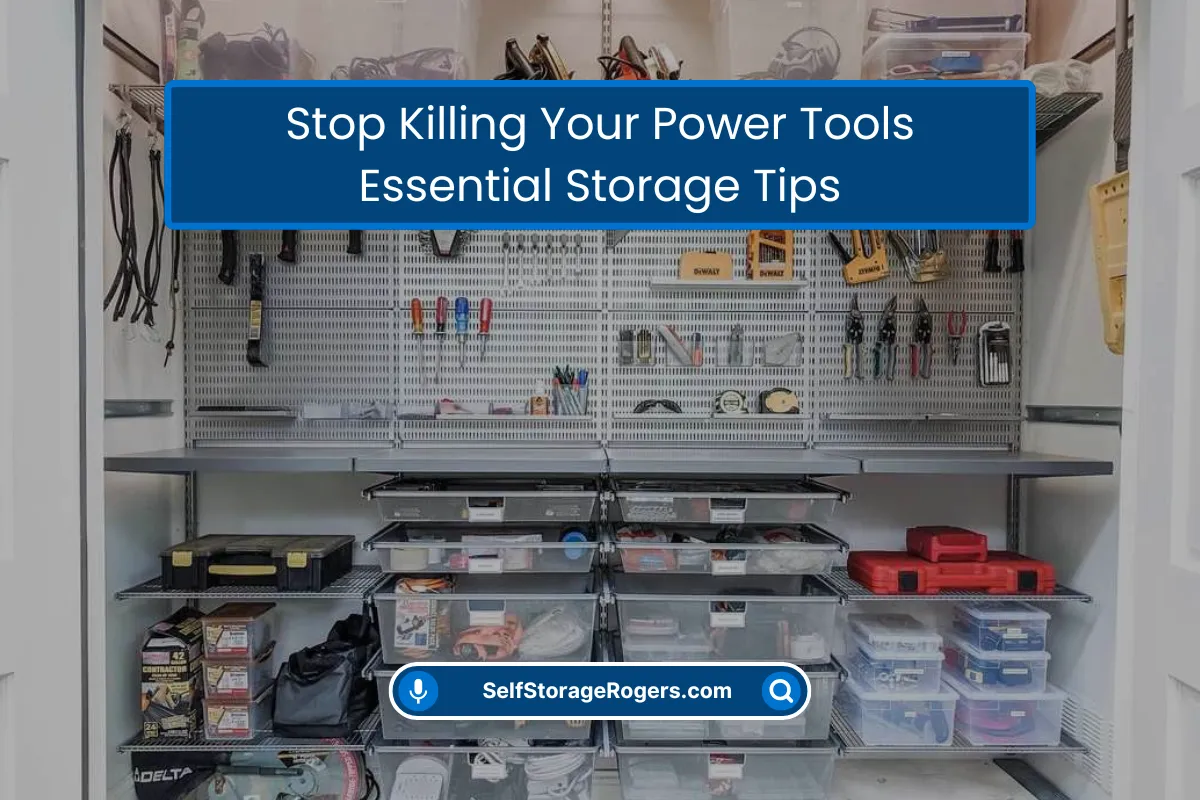
He was right. I got a 5×5 unit. It’s clean, it’s dry, and the temperature doesn’t swing from sauna to icebox every day. My tools actually feel clean and ready when I go get them. It’s not a musty, depressing chore anymore. It’s like a little workshop I can visit. If your home storage situation is working against you, it’s honestly worth every penny to find a proper spot.
A Few Pro-Tips for Your Space:
- Get ’em off the floor. Concrete sucks the warmth and pumps out moisture. I use a cheap wooden pallet I got for free. Shelving is even better.
- Become a packet hoarder. Those little “do not eat” silica gel packets in new shoes and beef jerky? I used to toss ’em. Now I save everyone and chuck them into my toolboxes. They’re tiny moisture magnets.
- Don’t cram everything in. Let the air move around a bit. Stuffing everything into one tight box is just asking for trouble.
Look, your tools let you build stuff, fix stuff, and feel like a capable human being. They deserve a little respect. A tiny bit of care before you store them means they’ll be ready and waiting for the next project, not a rusty pile of regrets.
Don’t be like old me. Be like new me. Your tools—and your wallet—will thank you.








0 Comments