I’ll never forget the sound. That sickening crunch when I opened the box labeled “KITCHEN – FRAGILE.” Inside, my grandmother’s favorite serving platter was in three pieces. I’d wrapped it in bubble wrap – what more was I supposed to do?
Turns out, a lot more.
If you’re running a household or prepping for a move, you quickly learn that bubble wrap is just the starting point. It’s like putting on a raincoat in a hurricane – helpful, but not nearly enough. After my grandmother’s platter disaster, I became a bit obsessed with getting fragile packing right. I want to share what I’ve learned the hard way, so you don’t have to learn it the same way.
It’s Not About Padding – It’s About Immobilization
The biggest lightbulb moment for me was this: The goal isn’t to make items soft. The goal is to make them not move. At all. If something can’t shift, shake, or rattle inside its box, it almost certainly won’t break.
Bubble wrap alone doesn’t stop movement. It just adds squish. You need a system.
Your First Layer of Defense is Probably in Your Laundry Basket
Before you spend a fortune on packing supplies, raid your closets. I’m dead serious.
- That stack of old t-shirts you’ve been meaning to donate? Perfect for wrapping stemware.
- Bath towels? Ideal for creating cushioning layers between plates.
- Those random socks missing their mates? Brilliant for protecting individual glass ornaments or small figurines.
I once packed an entire set of wine glasses using nothing but clean socks and tea towels before the bubble wrap even came out. They survived a cross-town move in the back of my friend’s pickup truck. The secret was the cloth, creating a firm, non-slip buffer.
The Box Matters More Than You Think
Here’s a mistake I made for years: using big boxes for fragile items. It seems logical – get everything in one place, right? Wrong.
A large box filled with heavy, fragile items becomes a back-breaking, unstable hazard. It’s too easy to overpack, and the weight of the items themselves can cause pressure cracks.
Go small. A box full of plates should be light enough that you can lift it with one hand without straining. If you’re huffing and puffing, you’ve created a liability.
Let’s Get Specific: How I Pack My Own Breakables
For Plates and Flat Dishes:
I stand them on their sides. Never, ever flat. Stacking them flat is like asking the bottom plate to bear the weight of the entire stack. I wrap each one in a layer of foam wrap (it’s less static-y than bubble wrap), then I slide them into the box like records into a crate. I use cardboard dividers from the liquor store – the ones from wine boxes work great – or I make my own from old cereal boxes. Crumpled paper fills any remaining gaps. No movement. Zero.
For Glasses and Mugs:
I give each one the “double wrap.” First, a sheet of plain packing paper, twisted at the top. Then, a layer of bubble wrap. And here’s my weird trick: I pack them upside down. The rim is the most fragile part, so by putting the sturdy base at the top, the rim gets extra protection from the box’s structure.
For Weird, Awkward Stuff:
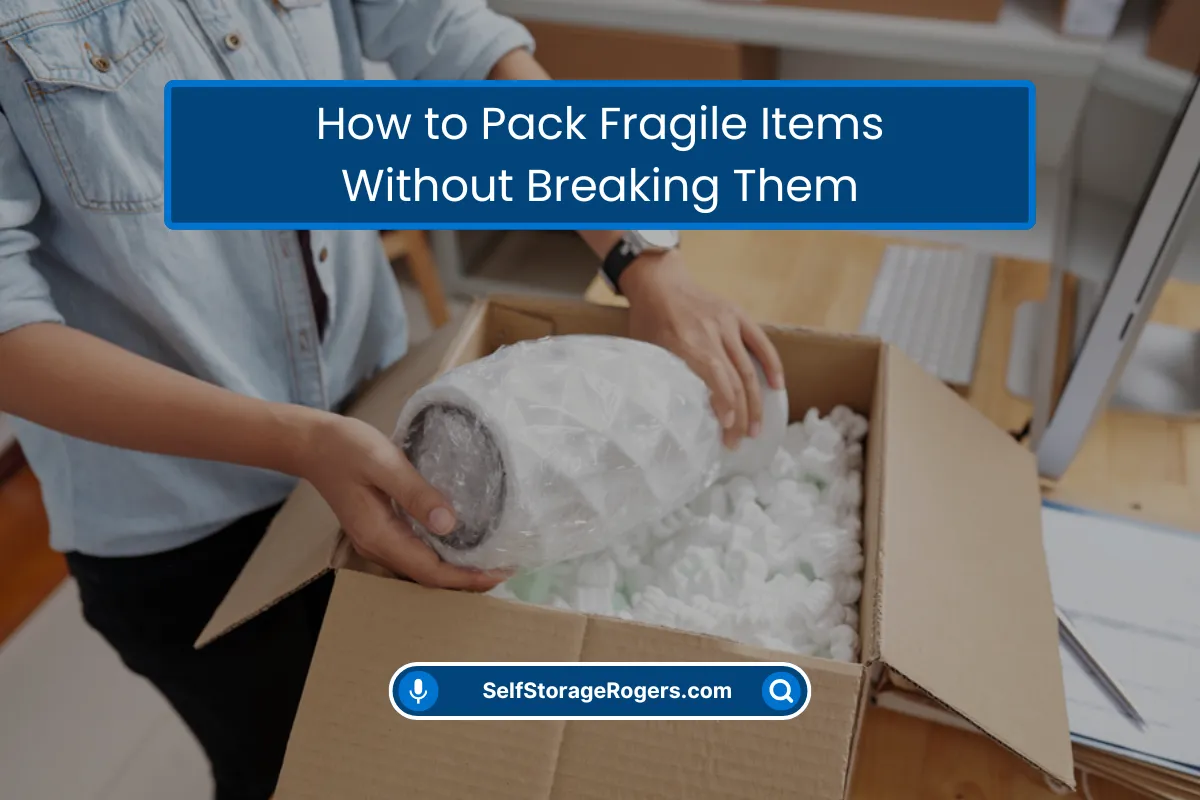
Lamps, vases, electronics. For these, I create a nest. I take a box and put a thick layer of crumpled paper or packing peanuts at the bottom. I place the item in the center, and then I slowly fill the space around it with more loose-fill, making sure it’s held firmly in place, suspended in the middle of the box, not touching any of the sides.
The Final, Critical Steps Everyone Skips
You can pack perfectly and still ruin everything if you fail here.
- Label like a crazy person. Don’t just write “FRAGILE” on the top. Write it on all four sides. Use a red marker. Be obnoxious about it. “GLASS – DO NOT CRUSH – HANDLE WITH CARE.” You cannot over-communicate.
- Stack smart. Your heavy, non-fragile boxes (books, tools) go on the bottom. Your fragile, lightweight boxes go on top. It’s simple physics, but in the chaos of moving, it’s the first thing to go out the window.
And here’s my final piece of advice, which comes from my own experience. Once you’ve packed your treasures with this much care, don’t undo all that hard work by shoving them into a damp basement or a scorching-hot attic. Fluctuations in temperature and humidity are the silent killers of heirlooms. They warp wood, weaken glue, and cause materials to expand and contract.
This is the exact reason we designed our storage units to be clean, dry, and secure. We offer a stable environment that acts as the final, perfect layer of protection for the things you’ve worked so hard to pack. Think of it as the safe deposit box for your grandmother’s platter, so you never have to hear that sickening crunch again.
Packing fragile items isn’t about finding a single magic material. It’s about building a system. A fortress. And when you do it right, the peace of mind is worth every extra minute you spend.









0 Comments